
The event starts in an hour. A line is forming outside. Inside, someone asks whether tickets can still be sold at the door, the payment terminal is looking for a connection and the first visitor shows a screenshot of an old confirmation email. This is the moment when door sales stop being a simple extra service and become an operational stress test.
Many organizers still treat ticket sales at the door as something you can add on the side. That only works for very small events with little pressure at the entrance. Once your audience grows, door sales affect flow, cash control, visitor experience and reputation.
Door sales in a digital ticketing world
Ticket buying behavior has changed. The door is no longer the obvious final sales channel. Online sales, mobile tickets and resale platforms have changed how visitors look for and use tickets.
For organizers, the entrance is no longer only a physical checkpoint. It is an extension of the ticket strategy. Teams that still rely on separate lists, cash notes or unclear agreements are working against modern visitor expectations.
When door sales still make sense
Door sales still have a place: local venues, community events, nights with unpredictable last-minute demand or situations where you deliberately want room for spontaneous attendance.
Only do it when you can answer three questions in advance:
- Capacity: can you process extra visitors without slowing the existing line?
- Control: can you issue tickets and validate them immediately?
- Communication: does the audience know whether door sales are available?
The issue is rarely the idea of door sales. The issue is usually the absence of limits, pricing logic and a clear process.
Strategic planning and pricing
Good door sales start weeks before the event, not at the entrance. A common mistake is deciding on event day to sell a few extra tickets at the door. At that point, pricing, capacity, communication and team boundaries are usually missing.

Decide the role of door sales first
Door sales can play three roles:
- Fallback You steer visitors toward presale but leave room for late decision-makers. This is usually the safest model.
- Regular sales channel This works best for small recurring events with a local audience that is used to spontaneous attendance.
- Emergency option You open door sales only when online sales fail or unexpected capacity remains. This requires a team that can switch quickly.
Door price should send a signal
If online and door prices are the same, you lose an important steering mechanism. Door sales require more manual handling, more staff attention and more risk at the entrance. A door price should often be higher than presale.
A simple structure is early bird, standard, late and then door sales. The door becomes the most expensive and least convenient option, which moves demand forward and reduces discussion at arrival.
Communication prevents stress
Much of the chaos at the door comes from unclear expectations. Visitors do not know whether sales are still open, whether payment is card-only or whether capacity can sell out.
Use the same message everywhere:
- Website: state clearly whether door sales are available.
- Social posts: repeat it on event day.
- Email: include it in the final visitor email.
- Entrance signage: show what is still possible on site.
For a broader sales approach, the event sales advice page is a useful starting point.
Hardware and software for smooth access
At 8:15 PM the line suddenly grows faster than your team can handle. That is when you see whether door sales are an extra revenue channel or a bottleneck you created yourself.
The minimum setup
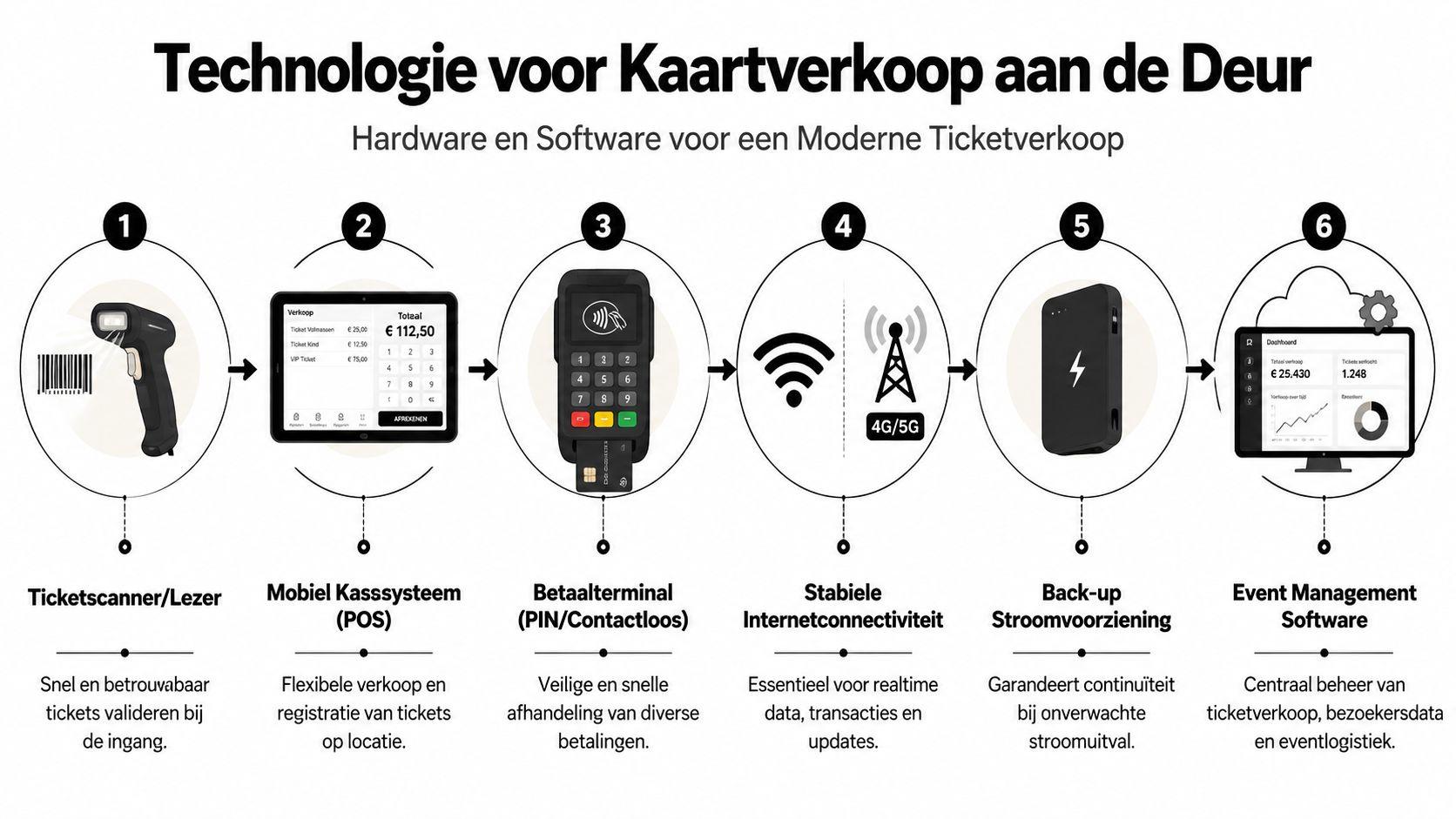
Door sales do not need a huge setup. They do need a logical one:
- Tablet or mobile checkout screen: for ticket sales, price selection and registration.
- Scanning on a second device or separate mode: so sales and access control do not block each other.
- Payment terminal: preferably connected to the same flow.
- Reliable internet: for live capacity, ticket issuing and entrance sync.
- Power banks or backup batteries: an empty battery can stop a queue faster than a software bug.
- One central ticketing system: inventory, sales, validation and reporting stay together.
If a staff member needs more than three screens or devices to get one visitor inside, the setup is too complex.
Issue and scan immediately
Every extra step matters at the door. A purchased ticket should become visible and scannable immediately. Do not rely on manual sending, delayed inboxes or screenshots.
A digital platform such as Tiqqo helps because sales and validation happen in the same environment. Door sales remain a controlled exception inside your digital process, not a separate island.
For preparation and fallback scenarios, a clear support channel for Tiqqo customers matters.
Managing payment options
Speed at the door is not only about scanning. A visitor who wants to buy needs to pay immediately. Every extra payment step slows the entrance and increases pressure on the team.
| Payment method | Advantages | Tradeoffs | Recommended for |
|---|---|---|---|
| Card and contactless | Fast, clean administration, lower cash risk | Depends on devices and connection | Most regular events |
| Credit card | Useful for international audiences and higher spend | Not every audience uses it | Conferences and international visitors |
| Cash | Accessible and useful as backup | Slower, counting errors, more closing work | Small local events |
| Card and cash | Maximum visitor flexibility | More complex operation | Mixed audiences with enough staff |
Card-only often speeds up the line and makes closing cleaner. The condition is clear communication and a backup plan for outages.
Logistics, staffing and flow
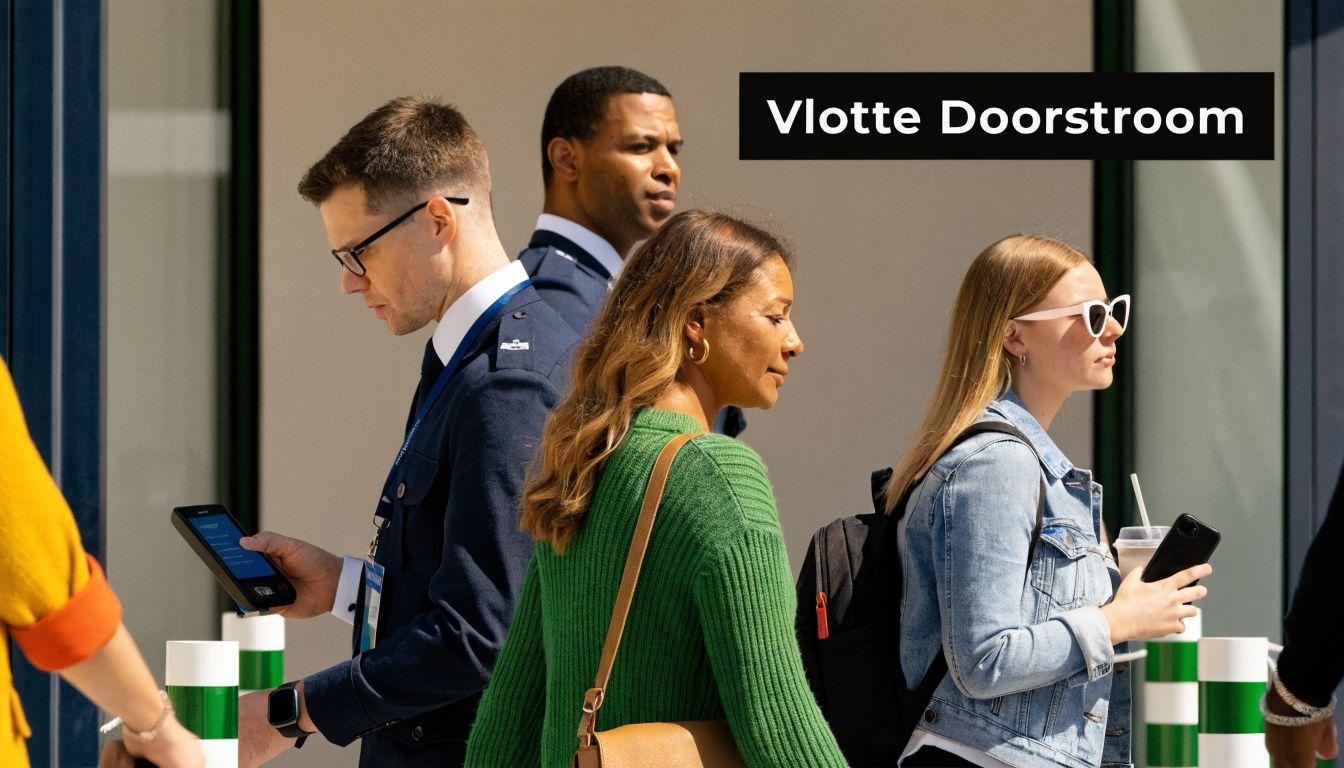
An entrance feels simple to visitors. For the team, it is a routine under pressure. People arrive in waves, someone joins the wrong line, and the room still needs to open on time.
Separate the flows
The biggest improvement is often task separation. Presale, guest list and door sales require different visitor behavior and different staff actions. Mixing them into one line slows everyone.
A robust entrance has at least:
- a line for visitors with an existing ticket
- a separate position for ticket sales at the door
- a problem desk for name changes, unreadable QR codes or discount questions
Give staff one job at a time
One person selling tickets, explaining rules, scanning tickets and handling complaints may look efficient, but it slows the operation. A small role split works better:
- Front host: sends people to the right line.
- Sales operator: handles door sales and payments.
- Scanner: validates access only.
- Shift lead: solves exceptions and makes decisions.
Legal and financial control
Door sales are also a legal and financial process. Check in advance whether your venue or municipality has extra requirements, whether entrance sales fall under existing permits and who is formally responsible for the transaction.
A clean closing routine should include:
- Keep channels separate Door sales, presale, guests and exceptions should not be mixed.
- Count cash separately Use two people, a fixed place and no audience pressure.
- Match digital payments with sales registration Do it line by line, not by instinct.
- Record exceptions immediately Do not rely on memory the next morning.
- Close the day report that same evening Waiting loses context.
Digital workflows create a stronger trail. You see transactions, times, ticket types and corrections centrally. That makes administration calmer and improves support for visitors through ticket buyer support.
Ticket sales at the door can work, but only when treated as a strategic choice with pricing logic, a technical foundation, a trained team and a reliable financial process. For many professional organizers, the lesson is clear: the less you need to solve at the door, the stronger the event operation becomes.