
A passe-partout ticket is one single admission ticket that gives access to multiple days, locations or events within a larger whole. In practice, that can mean access to all four home matches in a series or to a full festival, so visitors do not have to buy separate tickets each time.
For organizers, this is rarely just a convenient ticket type. It is usually a decision about cash flow, capacity, loyalty and access control. Especially with multi-day festivals, conference programs or sports series, the same problem quickly appears: separate tickets provide flexibility, but make planning, forecasting and audience loyalty harder.
A passe-partout does not solve that automatically. Poorly configured, it becomes a source of confusion, reservation issues and skewed expectations about price. Set up well, it becomes a sharp commercial product that gives visitors convenience and creates calm in the operation.
Introduction: the key to a complete event
Any organizer will recognize the situation. There is a program with several days or parts. Marketing wants early sales, operations wants control over capacity, and the ticketing flow has to remain understandable for visitors who do not want to compare five product pages first.
With separate tickets, a visitor has to choose again and again. Which day, which time slot, which session, which section. That works well for a one-off concert, but much less for an event that derives value from coherence. A festival weekend, a conference with multiple program tracks or a European home series needs a different product than a standard day ticket.
That is where the passe-partout ticket comes in. Not as a dictionary term, but as a commercial and operational tool. It creates one purchase moment for multiple visit moments and makes it possible to bundle access, priority and conditions into one product.
A good passe-partout does not only sell access. It sells predictability to the organizer and continuity to the audience.
In the Dutch market, the concept is familiar. A passe-partout is usually used for a defined period, such as a series of home matches or a full festival program. The value is not only in bundling, but also in fixed access during that period.
For fellow organizers, the real question is therefore not only what is a passe-partout ticket, but especially when it is smart to offer one. The answer depends on three things: the structure of the event, the degree of scarcity and whether loyal visitors should be rewarded with convenience, priority or certainty.
The core of the passe-partout ticket
In practice, most confusion does not start with the visitor, but at the organizer's table. A weekend ticket, combi ticket and passe-partout look similar, while operationally they do different things. You only use a passe-partout well when you know upfront which series you are selling, which rights belong to it and how access will be checked.
Take a Dutch sports example. At Go Ahead Eagles, a passe-partout gave access to all home matches in a defined European series, as explained in this overview of what a passe-partout ticket usually means in the Netherlands. It illustrates the central idea: you are not selling separate admission, but one access product for multiple visit moments within a clearly defined program.
For organizers, the difference is mainly in the product logic. A passe-partout bundles several moments under one purchase decision, often with fixed conditions around validity, transferability and access level. That makes it not only a ticket type, but also a way to organize capacity, audience expectations and the scan process more tightly in advance.
The difference from other ticket types
Many teams still group these products together too quickly. In the ticket shop, that causes confusion. At the entrance, sometimes too.
| Ticket type | Intended use | Main difference |
|---|---|---|
| Day ticket | Access to one day or one performance | Valid for one visit moment |
| Single ticket | Access to one specific session or match | Maximum choice, no bundle |
| Combi ticket | Access to a few selected parts | Limited combination, usually not a full series |
| Passe-partout | Access to multiple days, stages or matches within one whole | Broad validity within a predefined series |
That distinction may look small, but it determines how you sell and check the product. A weekend ticket is usually simple: Friday through Sunday, one site, one price. A passe-partout can also apply to several conference days, different rooms or a complete home series. In that case, your ticketing setup must clearly define which parts are included and which are not.
This is where things often go wrong. Organizers call something a passe-partout while the visitor still has to reserve per component or can only enter at certain times. That can be fine, but then call it that in your terms and FAQ. Otherwise you sell convenience and deliver extra explanation at the gate.
For setup, it helps to compare the available event ticket types in your ticket shop first. That quickly shows whether you really need a passe-partout, or simply a compact combi ticket that is less complex for sales, scanning and customer support.
A passe-partout only works strongly when the program also feels like one whole to the visitor.
The double win: benefits for visitor and organizer
You often see it in practice. A visitor hesitates over three separate days, waits too long and eventually buys only one ticket. With a well-designed passe-partout, you reduce that hesitation. You sell not only access, but also calm in the decision process and earlier commitment to the full program.
What the visitor gains
For visitors, the value is usually convenience, overview and certainty. Especially with multi-day festivals, conference series or a series of home matches, one purchase moment is simply easier than deciding again and again.
- Less choice pressure. The visitor does not have to decide per day or session whether a ticket is still worthwhile.
- More certainty about access. Especially for popular program parts, a passe-partout creates peace of mind because the basis of the visit is already secured.
- More chance of the full experience. Visitors drop off less often between separate sales moments and therefore experience the full program more often.
This effect is strongest at events where value builds over time. Think of a showcase festival, a professional conference with several tracks or a sports series in which every match is part of a bigger story. The visitor is not buying a collection of loose moments, but one continuous experience.
What the organizer gains
For organizers, a passe-partout becomes interesting as soon as the product helps steer the event. Then it is not only about bundling, but about revenue, planning and audience loyalty.
The first gain is earlier revenue. That money is available sooner, which helps with production, crew planning and marketing decisions. For smaller and mid-sized events in the Netherlands, that can make a difference, especially when suppliers or venues need to be confirmed early.
The second gain is stronger loyalty from returning audiences. A visitor who commits to the full series in advance shows more involvement than someone who decides per component. While a single ticket measures interest at one moment, a passe-partout shows who wants to connect with the full series.
The third gain is more control over access and capacity. You know earlier how many people are likely to return across multiple days or components. That makes front office work, scanning, communication and occupancy planning more predictable, even though no-shows and peak moments remain uncertain.
When that double win does not happen
A passe-partout only works well when the program truly feels coherent. At a broad city festival with many casual visitors, or a program where most visitors only care about one favorite part, a single ticket may match buying behavior better.
It can also go wrong operationally. For example, when someone buys a passe-partout but still has to reserve per session without clear upfront explanation. That creates frustration at the service desk and discussion at the entrance. The visitor experiences extra steps. The organization gets more questions, more exceptions and more pressure on the access team.
The double win does not happen by itself. You have to design it.
Smart pricing: strategies for maximum value
The most persistent misconception is simple: a passe-partout should always mainly be a cheaper alternative. In practice, that is only partly true. In Dutch club campaigns, the product is often a loyalty instrument. In recent campaigns by Dutch clubs such as Feyenoord and FC Twente, the passe-partout was mainly available to season ticket holders and members, where the value was not only price but also guaranteed access and priority, as explained in this analysis of the nuance behind passe-partout and price advantage.
Value is bigger than discount
A passe-partout does not have to enter the market as a stunt price. For many organizers, that is even unwise. Too much discount can mainly attract buyers who would have come anyway, while the product may be intended to help loyal audiences decide earlier.
Practically, there are roughly three value elements:
- Access certainty. This is often the strongest trigger when capacity is scarce.
- Priority or exclusivity. A passe-partout can be part of a membership or fan strategy.
- Convenience in one purchase. Especially relevant with busy programs and recurring visit moments.
What works in pricing
A good pricing strategy starts with positioning, not discount tables. First decide whether the product is meant for broad reach or for a core audience.
A compact comparison helps:
| Positioning | When it fits | Risk |
|---|---|---|
| Broad audience product | Festival or series with a low purchase threshold | Too little sense of scarcity |
| Loyalty product | Club, venue or community with returning audiences | Can feel exclusive to new audiences |
| Premium bundle | Event with scarce capacity or high-demand parts | Requires tight communication about benefits |
If you do use price actions, link them to clear conditions. Think of early purchase, specific target groups or limited availability. A random discount without a story often undermines perceived value.
For price differentiation, discount codes in ticket sales can be useful, but only when the underlying product logic is right. Strategy first, code second.
Do not automatically lower the price of a passe-partout. First increase the clarity of the benefit.
From idea to practice: implementation in your ticket shop
Implementation determines whether a passe-partout feels smooth or creates administrative noise. That is especially true with fixed seats, member rights and phased sales. Feyenoord showed how such a sale can be organized in phases, with season ticket holders first able to buy back their own seat. It shows that capacity, seats and membership rights need to come together in one workflow to prevent overselling, as described in the practical sales information about Feyenoord's Champions League passe-partout.
The operational checklist
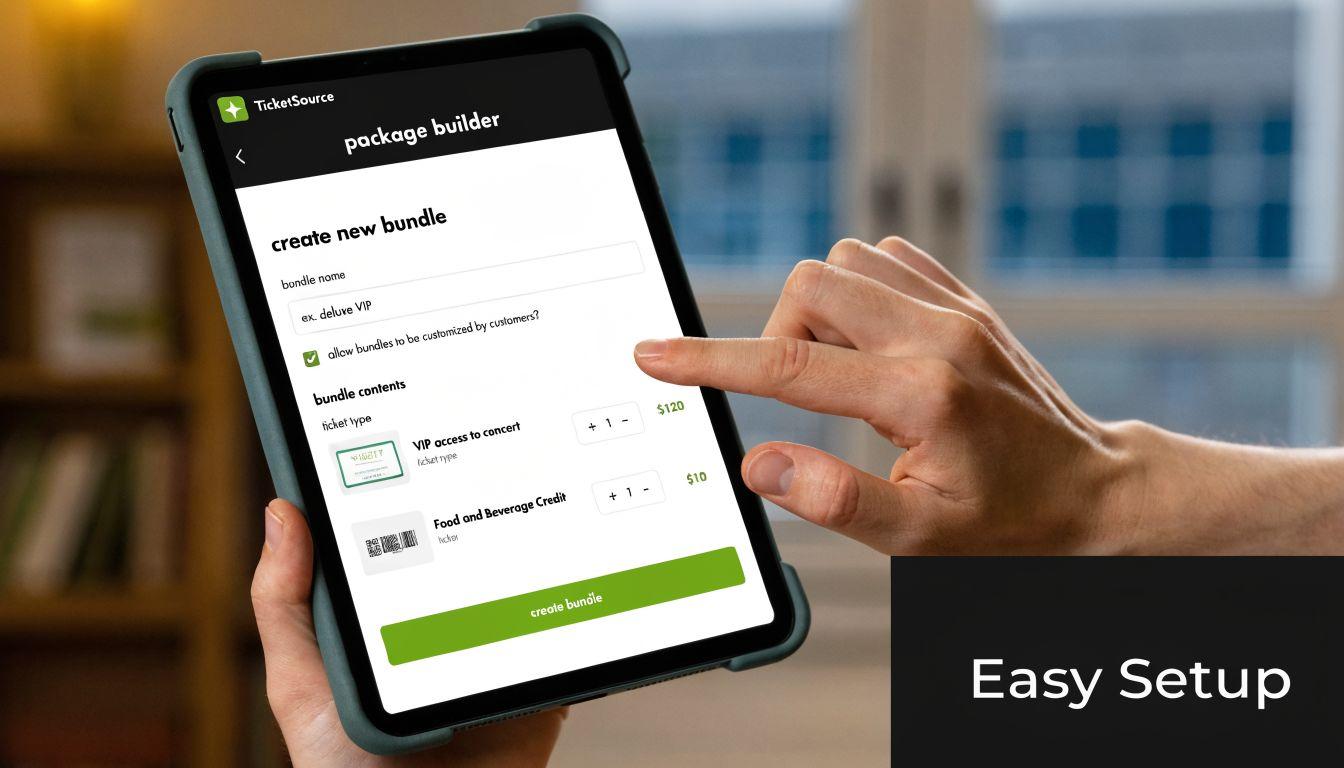
When setting up a passe-partout in a ticket shop, at least these parts must be right:
- Product definition. Define which days, sessions or matches are covered by the ticket.
- Access logic. Decide whether one QR code is valid on multiple days, or whether each component still needs a reservation or separate admission ticket.
- Capacity rules. Link the product to available inventory per day, room, section or seat.
- Audience rights. Define who is allowed to buy, such as members, season ticket holders or previous visitors.
- Post-purchase communication. Make clear what is automatically included and where an extra action may still be required.
This is where many campaigns go wrong. Not at the buy button, but in expectations afterwards. If a visitor thinks everything is automatically arranged while they still need to reserve per component, friction appears immediately.
Phased sales without chaos
Phased sales are often smart when scarcity and loyalty come together. They prevent loyal visitors from missing out and give the organization more control over priority.
A workable model often looks like this:
- Buy-back phase for existing seat holders Especially relevant for stands, fixed seats or season structures.
- Follow-up phase for a broader loyal group For example members or regular relationships.
- Open sale or limited remaining sale Only if inventory is still available afterwards.
For this setup, you need a system that brings ticket sales, segmentation and access management together. An example is a dedicated event ticket shop, where product types, audiences and validation can be managed in one environment. Tiqqo is one of the platforms that supports these kinds of workflows.
The technical model has to be as careful as the pricing model. Otherwise the campaign sells better than the operation can handle.
What often does not work
Three mistakes come back again and again:
- Selling a passe-partout as a simple bundle ticket, while seat rights or reservations are complex.
- Managing capacity only on total volume, without accounting for sections, seats or day parts.
- Underestimating post-purchase communication, forcing support teams to explain the real setup manually.
Conclusion: is a passe-partout right for your event?
A passe-partout is not a default solution for every event. It works especially well when the program consists of several coherent parts and when an organizer wants to steer more on loyalty, certainty and pre-organized access.
The core is simple. The product must feel logical to the visitor and remain manageable for the organization. If either of those is missing, the ticket type becomes heavier than necessary. In that case, a day ticket, combi ticket or single-ticket sale is often more honest and clearer.
Questions an organizer should ask
Use this short check before the product goes live:
- Does the event consist of several clear parts that together form one whole?
- Is there capacity scarcity, for example per day, section, room or session?
- Is there a loyal audience that benefits from priority, certainty or fixed access?
- Can the ticketing system handle rights and capacity properly without manual workarounds?
- Is it immediately clear to the visitor after purchase what is included and whether reservation is still required?
The decision framework in practice
If most answers are yes, a passe-partout is often more than a convenient ticket. It becomes a strategic product that connects sales, planning and relationship management.
If the answers are mixed, scaling back is usually smarter. A simpler bundle is often operationally stronger than an ambitious passe-partout that is not supported internally or technically.
For anyone asking what is a passe-partout ticket, the short answer is clear. It is one admission ticket for multiple components. For organizers, the more important answer is this: it is only valuable when price, rights, capacity and communication are aligned exactly.